


A sleeper tractor can look inexpensive on the day it is purchased and become expensive in year three. The reverse can also happen: a higher-priced truck may deliver more productive weeks, fewer roadside interruptions, and better driver retention over the ownership period. A monthly payment comparison misses that entire story.
You May Also Like
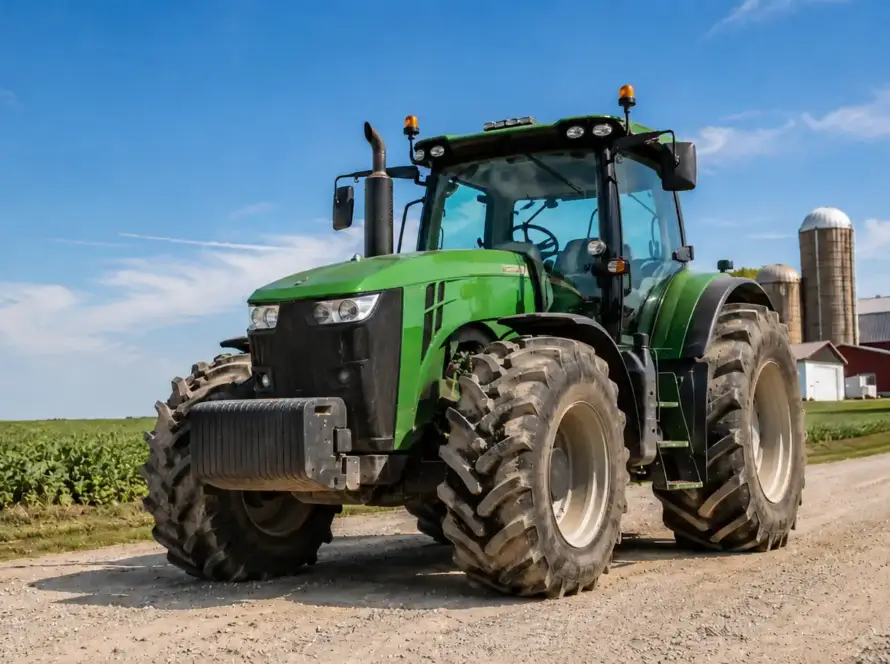

For long-haul carriers, sleeper truck financing is a five-year operating decision compressed into a finance contract. Mileage, idle time, emissions-system history, auxiliary power, warranty coverage, driver acceptance, and expected resale all change the economic result. New and used units carry different risks, not simply different prices.
The useful comparison is a timeline. What will the tractor cost to place in service now? What maintenance is likely before the midpoint of the term? Will the cab and powertrain still fit the carrier’s lanes and driver strategy near the planned replacement date? Those questions create a clearer financing choice than chasing the lowest payment.
Table of Contents
- Year Zero: Define the Ownership Horizon
- Driver Acceptance Belongs in the Model
- New and Used Sleepers Carry Different Risk
- Maintenance Curves, Not Just Mileage
- The Ownership-Horizon Worksheet
- What the Tractor May Be Worth at Exit
- Place the Entire Transaction on One Timeline
- Choose a Term That Does Not Outlast the Plan
- What National Data Can and Cannot Tell You
- What an Underwriter Needs to Understand
- The Five-Year Decision Matrix
- Frequently Asked Questions
- Choose the Ownership Story You Can Defend
- Sources
Extend the decision beyond the first payment year.
Year Zero: Define the Ownership Horizon
| Ownership stage | Main question | Evidence |
|---|---|---|
| Entry | What condition and project cost are being accepted? | Inspection of engine hours and complete budget |
| Midpoint | Which major maintenance event is likely? | cooling system |
| Late term | Will the unit still fit the work and support network? | Utilization, downtime, technology, and customer needs |
| Exit | Sell, trade, keep, or replace? | Balance, condition, market, and replacement plan |
During the middle years: Useful life is an operating estimate, not a number taken automatically from an accounting schedule. Remaining life depends on prior duty, condition, annual use, maintenance support, technology, customer requirements, and the point at which downtime or repair cost makes replacement more sensible.
The ownership plan should mark likely service events involving aftertreatment components, turbocharger, cooling system, injectors, clutch or transmission, auxiliary power unit, tires, brakes, and roadside downtime. It should also identify when the sleeper truck may no longer fit the carrier’s work because of capacity, emissions rules, software support, safety expectations, accessibility requirements, or customer specifications. Obsolescence can arrive before physical failure.
Resale or trade value should be treated as uncertain. Configuration, brand support, records, condition, market demand, and timing influence exit value. A projected resale figure can support comparison, but it should not be the only reason a transaction appears affordable or the only source expected to satisfy a final obligation.
Term, planned replacement, major maintenance, and expected exit should be placed on one timeline. When a large repair and the remaining balance occur at the same point, the structure may be too long or the down payment and reserve may be inadequate.
Driver Acceptance Belongs in the Model
At the planned exit: The cost model should include wages, payroll burden, training, nonproductive time, and supervision. For assignments such as over-the-road freight, dedicated lanes, team operations, refrigerated freight, dry van service, and extended regional runs, the business should distinguish equipment time from total labor time. Waiting, setup, loading, cleaning, programming, travel, and paperwork can consume the day even when the meter shows limited use.
| People requirement | Evidence | Risk if missing |
|---|---|---|
| Primary operator | Named employee, qualification, or hiring plan | Asset remains idle or underused |
| Support role | Dispatch, loading, programming, maintenance, or crew coverage | Meter time does not become completed work |
| Training | Vendor or internal plan and date | Slow ramp, errors, or avoidable wear |
| Backup coverage | Cross-training, spare capacity, or subcontract plan | One absence stops revenue or service |
Equipment does not create usable capacity without qualified people. The operator should identify who will operate, dispatch, maintain, load, program, inspect, clean, or support the sleeper truck. Hiring lead time, licensing, training, scheduling, overtime, and turnover may determine the actual start date more than delivery.
Productivity assumptions need the intended staffing model. One operator may complete the work but create overtime or coverage problems. A crew may require another vehicle or support asset. Office staff may absorb dispatch, documentation, billing, or customer communication that was not included in the purchase case.
A credible expansion request identifies the person or hiring plan behind the capacity. If the operator is not yet available, the cash-flow model should include the recruitment period and a lower initial utilization case based on revenue per loaded mile, deadhead, fuel, driver compensation, lodging avoided by the sleeper, maintenance, insurance, permits, and days away from service.
New and Used Sleepers Carry Different Risk
Ownership test: Inspection findings should be converted into decisions. A concern involving idle time may justify a repair before delivery, a price reduction, a larger reserve, a shorter term, a seller warranty, or a decision to stop. The purpose is not to predict every failure. It is to identify material wear and allocate responsibility before closing.
The first path
Age, hours, and mileage create a starting point, but they do not establish condition. The inspection should address mileage, engine hours, idle time, prior over-the-road duty, collision history, emissions-system records, oil analysis, tires, brakes, suspension, and sleeper condition. Prior duty, storage, overloading, contamination, collision or structural repair, operator practice, and maintenance quality can make two apparently similar units carry very different remaining risk.
Service records matter when they can be reconciled with the unit. The fleet should compare serial numbers, dates, hours or mileage, parts replaced, recurring fault history, and major work. Missing records do not automatically make a purchase impossible, but they increase the value of an independent inspection and reduce the confidence that should be placed in a long remaining-life assumption.
The alternative path
The first maintenance cycle should be priced before the financing amount is finalized. Items such as aftertreatment components, turbocharger, cooling system, injectors, clutch or transmission, auxiliary power unit, tires, brakes, and roadside downtime may arrive earlier than the scheduled payment model suggests. Keeping a repair reserve is often more financially useful than putting every available dollar into the down payment.
Maintenance Curves, Not Just Mileage
Finding
At acquisition: Condition establishes the opening position. Findings involving idle time can move the first major service event forward. The carrier should not use a generic annual percentage when inspection evidence indicates specific work is approaching.
Maintenance cost is rarely uniform. The ownership plan should identify daily or shift checks, scheduled services, wear items, major components, seasonal work, and the cost of removing the sleeper truck from service. Relevant areas may include aftertreatment components, turbocharger, cooling system, injectors, clutch or transmission, auxiliary power unit, tires, brakes, and roadside downtime.
Financial interpretation
Downtime has two prices: the repair invoice and the operational consequence. That consequence may include rental, subcontracting, overtime, missed routes, delayed harvest, lost production, canceled trips, or a contract penalty. Parts availability, dealer response, mobile service, and technician access therefore belong in the financial review.
Long-haul rates, seasonal freight, weather, and home-time schedules can change utilization. Schedule preventive work around the operating calendar and fund a reserve before the peak period. A lower scheduled payment does not compensate for a maintenance plan that repeatedly takes the unit out of service when demand is highest.
The Ownership-Horizon Worksheet
During the middle years: Place the sleeper on a time line from delivery through disposal. The worksheet records planned annual mileage, warranty changes, major maintenance exposure, driver acceptance, fuel and idle strategy, expected resale, and the date the carrier intends to replace the unit. It prevents a first-year payment from dominating a five-year choice.
The transport company can build this working model with operating records rather than broad market assumptions. Use recent invoices, dispatch or production data, service history, employee schedules, vendor documents, and bank activity where relevant. Separate confirmed work from probable work and probable work from a general sales opportunity. The sleeper truck should not receive full utilization on day one unless the records support that assumption.
| Evidence layer | Article-specific example | Management use |
|---|---|---|
| Operating evidence | team operations | Confirm volume, timing, and margin |
| Configuration evidence | engine rating | Match the real assignment |
| Condition or readiness | collision history | Price repair or deployment delay |
| Cash evidence | maintenance | Use conservative timing |
| Control evidence | inspection | Keep written support in the file |
Run the model in at least three versions. The conservative version includes a slower start, one meaningful interruption, and delayed cash receipts. The expected version uses current records without assuming perfect execution. The strong version can show upside, but it should not be the only version that supports the obligation. For this purchase, a stress event involving cooling system should be visible rather than buried in a general contingency percentage.
Finish with written decision gates. Confirm the seller, configuration, placed-in-service date, total project cost, inspection or acceptance evidence, insurance, cash due at closing, and the reserve remaining afterward. If a gate fails, the response may be a price adjustment, repair, different unit, revised financing structure, delayed purchase, rental, or no transaction. That discipline is more useful than forcing the sleeper truck into a payment target.
- State the operating result expected from dry van service.
- Verify the requirement involving axle ratio.
- Document the condition or readiness issue involving oil analysis.
- Keep liquidity for permits.
- Assign a named owner and due date to every unresolved gate.
What the Tractor May Be Worth at Exit
At the planned exit: Useful life is an operating estimate, not a number taken automatically from an accounting schedule. Remaining life depends on prior duty, condition, annual use, maintenance support, technology, customer requirements, and the point at which downtime or repair cost makes replacement more sensible.
| Ownership stage | Main question | Evidence |
|---|---|---|
| Entry | What condition and project cost are being accepted? | Inspection of engine hours and complete budget |
| Midpoint | Which major maintenance event is likely? | cooling system |
| Late term | Will the unit still fit the work and support network? | Utilization, downtime, technology, and customer needs |
| Exit | Sell, trade, keep, or replace? | Balance, condition, market, and replacement plan |
Term, planned replacement, major maintenance, and expected exit should be placed on one timeline. When a large repair and the remaining balance occur at the same point, the structure may be too long or the down payment and reserve may be inadequate. For the sleeper truck, record this point in the What the Tractor May Be Worth at Exit review before closing.
The ownership plan should mark likely service events involving aftertreatment components, turbocharger, cooling system, injectors, clutch or transmission, auxiliary power unit, tires, brakes, and roadside downtime. It should also identify when the sleeper truck may no longer fit the carrier’s work because of capacity, emissions rules, software support, safety expectations, accessibility requirements, or customer specifications. Obsolescence can arrive before physical failure. For the sleeper truck, record this point in the What the Tractor May Be Worth at Exit review before closing.
Resale or trade value should be treated as uncertain. Configuration, brand support, records, condition, market demand, and timing influence exit value. A projected resale figure can support comparison, but it should not be the only reason a transaction appears affordable or the only source expected to satisfy a final obligation. For the sleeper truck, record this point in the What the Tractor May Be Worth at Exit review before closing.
Place the Entire Transaction on One Timeline
| Cost layer | Examples | Funding question |
|---|---|---|
| Acquisition | Purchase price and approved options including tax | What is included in the final invoice? |
| Deployment | registration, transportation, and setup | Can the unit legally and practically begin work? |
| First operating cycle | deadhead, labor, supplies, and collections gap | How much cash remains after closing? |
| Contingency | Unexpected work involving warranty | What event triggers a budget review? |
Ownership test: The carrier should preserve a separate first-cycle reserve. That reserve may cover fuel, ordinary overhead, early maintenance, and the delay between completing work and collecting cash. Using the entire bank balance to reduce the financed amount can weaken the very operation expected to repay the financing.
The quoted price is only one line in the project budget. Placing the sleeper truck into service may require tax, title, registration, permits, transportation, inspection, warranty, auxiliary power unit service, mattress and cab equipment, telematics, insurance, and initial maintenance. The budget should identify which costs are included in the seller invoice, which may be eligible for financing, and which will be paid directly from operating cash.
Timing is as important as amount. Deposits, freight, taxes, insurance, installation, permits, training, initial repairs, supplies, and payroll can be due before the asset produces revenue. A project that is affordable over several years can still create a short-term cash shortage when these items cluster around delivery. For the sleeper truck, record this point in the Place the Entire Transaction on One Timeline review before closing.
Build the budget with an approved limit and a contingency category. If the installed or deployed cost rises above the limit, management should reduce scope, obtain another quote, change the transaction, or pause. Sunk deposits and schedule pressure should not be allowed to convert an incomplete budget into an automatic approval. For the sleeper truck, record this point in the Place the Entire Transaction on One Timeline review before closing.
Choose a Term That Does Not Outlast the Plan
At acquisition: Loan and lease structures are not interchangeable. Ownership, purchase options, residual obligations, early termination, accounting treatment, tax treatment, and flexibility can differ. No structure is universally best. The appropriate choice depends on cash flow, expected use, ownership goals, asset type, and the programs available to the applicant.
- Use the same transaction assumptions for every proposal.
- Confirm whether title is included or paid separately.
- Match term to useful life and planned ownership.
- Ask for early payoff and end-of-term terms in writing.
- Do not rely on unverified tax outcomes or promised approval.
Financing proposals should be normalized before they are compared. Use the same purchase price, down payment, amount financed, term, payment frequency, fees, included project costs, end-of-term obligation, and assumed delivery date. A lower payment created by a longer term or a large final obligation is not automatically a lower-cost or lower-risk choice.
Term length should reflect expected useful life and the planned ownership horizon for the sleeper truck. A schedule that extends beyond the period of productive use can leave the fleet paying after the unit requires replacement or major work. A term that is too short may create unnecessary cash pressure even when the asset will remain useful for years.
Request written answers on cash due at closing, number and timing of payments, fees, security interests, insurance requirements, vendor payment conditions, early payoff method, and end-of-term responsibilities. Tax or accounting benefits should be reviewed with qualified professionals and should not be treated as guaranteed savings. For the sleeper truck, record this point in the Choose a Term That Does Not Outlast the Plan review before closing.
What National Data Can and Cannot Tell You
During the middle years: Freight conditions can move quickly, so recent volume alone should not determine a multiyear equipment commitment.
American Trucking Associations publishes a monthly truck tonnage index, while FMCSA maintenance resources reinforce that roadworthiness depends on systematic inspection, repair, and records. The practical use of those sources is to stress-test utilization and maintenance assumptions, not to predict a guaranteed freight cycle. For the sleeper truck, record this point in the What National Data Can and Cannot Tell You review before closing.
What an Underwriter Needs to Understand
At the planned exit: An underwriting file should tell one consistent story. The legal business name, ownership, seller, price, serial or VIN information, cash contribution, equipment description, intended use, and requested structure need to agree across the application, quote, insurance, and supporting documents. Inconsistency creates questions even when each document looks complete by itself.
The review may consider business and personal credit, time in business, revenue, bank activity, existing obligations, cash flow, industry conditions, owner experience, equipment value, seller information, and the proposed transaction. No single factor controls every decision, and requirements vary by applicant, asset, program, and funding source.
For the sleeper truck, useful supporting records may include detailed invoice, VIN, title, mileage statement, maintenance history, warranty terms, inspection, seller credentials, insurance, and intended lane information. Used or specialized units may require more evidence involving idle time. The carrier should request a document list early, assign an owner to each item, and resolve title, lien, inspection, insurance, or seller issues before building operations around an assumed funding date.
The business explanation should connect the equipment to repayment capacity without exaggeration. Use current workload, replacement history, contracts, route data, production records, or a conservative forecast based on revenue per loaded mile, deadhead, fuel, driver compensation, lodging avoided by the sleeper, maintenance, insurance, permits, and days away from service. Approval and funding remain separate stages; a credit decision does not mean every closing condition has been satisfied.
The Five-Year Decision Matrix
Ownership test: A final decision should make the tradeoffs visible. For sleeper truck financing, the transport company is not choosing between an expensive unit and a cheap unit. It is choosing among different combinations of readiness, condition risk, operating fit, cash use, payment structure, and exit flexibility.
| Decision factor | Evidence to review | Pass condition |
|---|---|---|
| Operating fit | Specifications and actual work for the sleeper truck | Required jobs can be performed without a workaround |
| Readiness | Delivery, installation, staffing, approvals, and training | Placed-in-service date is credible |
| Cash resilience | Conservative forecast using deadhead | Slow-period obligations remain manageable |
| Condition and support | Inspection, warranty, parts, service, and backup | Known risks are priced and controlled |
| Financing structure | Upfront cash, term, payment timing, fees, and end obligations | Structure fits useful life and operating cycle |
The base case should stand without optimistic assumptions about revenue per loaded mile, deadhead, fuel, driver compensation, lodging avoided by the sleeper, maintenance, insurance, permits, and days away from service. Then test a slower start, one major repair or implementation delay, and weaker collections. A proposal that works only in the strongest case is not necessarily affordable; it may simply postpone the pressure.
Write the decision criteria before the last proposal arrives. The criteria should reflect new versus used sleeper tractors, the work the sleeper truck must perform, the latest acceptable start date, the amount of liquidity that must remain available, and the failures the business cannot tolerate. Weight the few factors that could actually change the outcome.
Record why the selected option won and which conditions still need to be satisfied. That note becomes useful during closing, deployment, and the next equipment review. It also prevents a late discount, trade allowance, or monthly-payment change from replacing the operating logic that started the purchase.
Frequently Asked Questions
What should be compared besides the monthly payment?
At acquisition: Compare upfront cash, amount financed, payment frequency, term, fees, total scheduled obligation, early payoff or termination language, end-of-term requirements, collateral or guarantee provisions, and the consequences of delay or default. Then test the structure against the actual useful life and cash cycle of the sleeper truck.
What role does insurance play in the closing?
Insurance requirements depend on the asset, use, location, program, and transaction. Obtain a quote early and confirm the exact unit, value, loss-payee language, effective date, and any commercial or specialized coverage needed. A mismatch between the invoice and insurance binder can delay funding or operation. For the sleeper truck, record this point in the Frequently Asked Questions review before closing.
Can installation and related costs be financed with the equipment?
Some programs may allow eligible soft costs, but treatment varies. Obtain itemized quotes for freight, installation, training, software, permits, taxes, or site work and ask how each item is handled. The business should know which costs are included in the financed amount and which must be paid from working cash. For the sleeper truck, record this point in the Frequently Asked Questions review before closing.
Can a startup obtain sleeper truck financing?
Programs may be available to some newer businesses, but startup requests can receive closer review of owner experience, credit, equity contribution, contracts, cash reserves, seller, and the business plan. A startup should not forecast full utilization immediately. It should show a staged ramp and enough liquidity to absorb slower sales or collections.
What documents should be ready before applying?
A useful file normally includes business and owner information, recent financial or bank records as requested, a detailed invoice or purchase order, seller information, equipment identifiers, and supporting records such as warranty terms. The exact list varies by transaction. Clean, consistent documents can reduce avoidable questions, but they do not guarantee approval or funding.
How does equipment condition affect the request?
Condition affects reliability, value, remaining life, maintenance reserve, and sometimes program eligibility. For this sleeper truck, review evidence related to idle time. A low price does not offset a short remaining life when repairs and downtime occur during the busiest operating period.
Choose the Ownership Story You Can Defend
During the middle years: The strongest decision leaves a trail of evidence. Specifications, inspection, seller documentation, cash forecasts, support arrangements, and acceptance records should all point to the same operating use.
For sleeper truck financing, the fleet should select the sleeper truck only after the work, timing, condition, support, financing structure, and remaining liquidity have been tested together. Approval and funding depend on the applicant and transaction, and no forecast eliminates operating risk.
Business owners who want help organizing the equipment request and comparing available structures can contact Vitality Finance or start an application. The conversation should begin with the asset, the operating need, and the financial evidence behind the purchase, not with a promised approval or a payment taken out of context. For the sleeper truck, record this point in the Choose the Ownership Story You Can Defend review before closing.
