


Rear loaders and front loaders are both garbage trucks, but they support different route economics. A rear loader is commonly used for residential, mixed, and hand-loaded collection. A front loader is designed around commercial dumpsters. Because the equipment and customer model are different, the financing decision should also be different.
You May Also Like
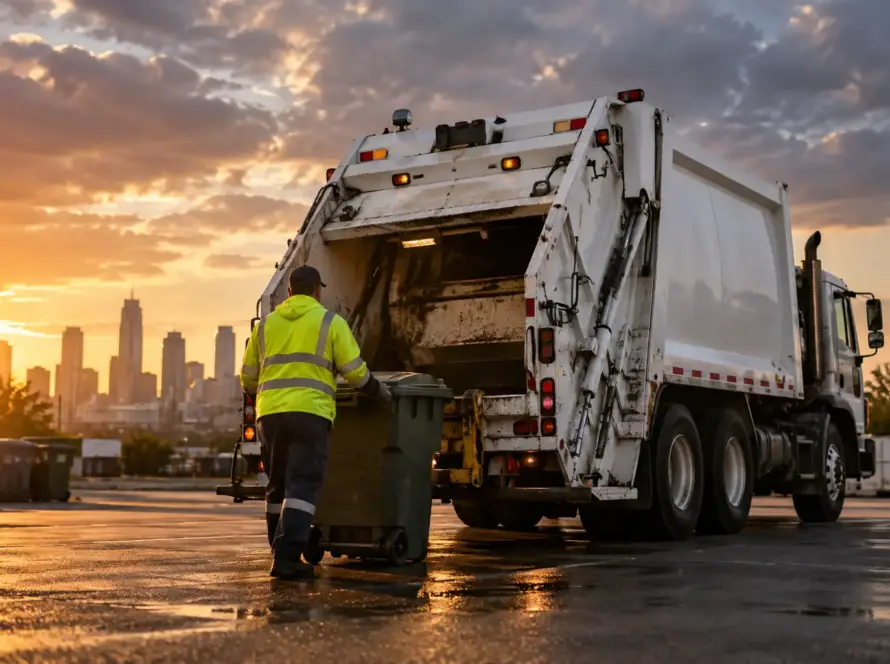
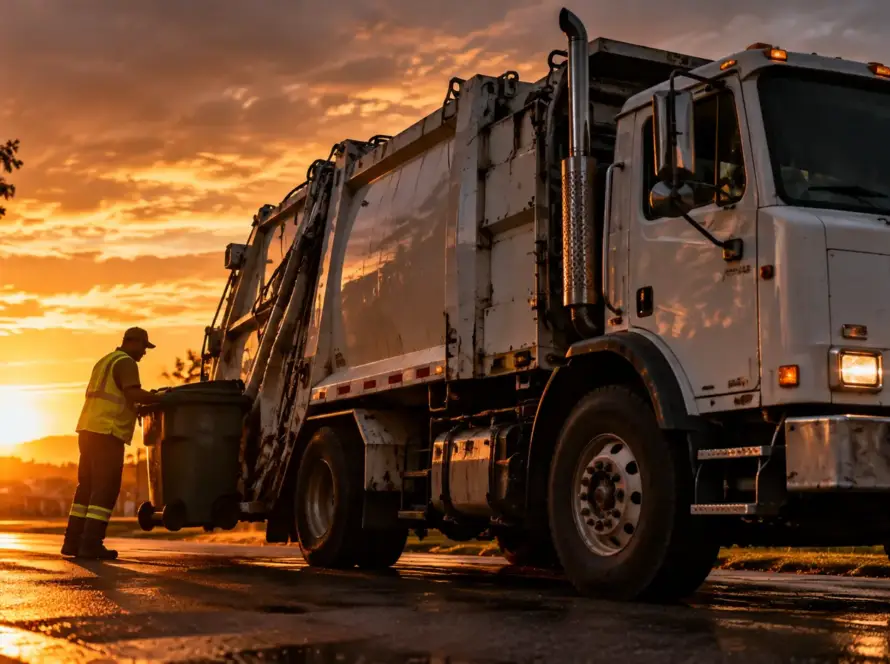
Current 2026 listing examples show the scale of the price gap. Two new rear-load Peterbilt units reviewed for this content were listed around $234,920 and $284,626. Several new Peterbilt 520 front loaders were listed above $418,000. These examples are not market averages, but they show why a buyer should not compare the two truck types only by monthly payment.
The correct question is: Which unit produces the strongest route contribution after labor, fuel, disposal, maintenance, insurance, and financing cost?
For the complete financing process, start with Garbage Truck Financing. For a detailed price discussion, see How Much Does a Garbage Truck Cost?
How a Rear Loader Works
A rear loader collects waste through an opening at the back of the truck. Material may be loaded by hand, from carts using a tipper, or from compatible containers. A hydraulic packer compacts the material into the body.
This design can be flexible for residential neighborhoods, mixed routes, alleys, smaller commercial stops, and areas where collection methods vary. Depending on the route, a rear loader may use a driver plus one or more helpers, although cart systems and operational practices can change crew needs.
The financing case for a rear loader should therefore consider labor as well as truck cost. A lower equipment payment can be offset by a larger crew requirement.
How a Front Loader Works
A front loader uses hydraulic arms and forks to lift commercial dumpsters over the cab and empty them into the top of the body. It is built for recurring commercial collection where customers use compatible containers.
The truck can support dense commercial routes with restaurants, retail centers, apartments, warehouses, offices, and industrial customers. The revenue model often depends on container placement, recurring service frequency, disposal weight, and route density.
Front loaders can be expensive because of the heavy chassis, lift system, refuse body, hydraulics, controls, and options. The higher purchase price can still be justified when the route has enough recurring commercial revenue.
Purchase Price and Amount Financed
Price is the most visible financing difference.
A rear loader may require a smaller loan and lower cash contribution simply because the acquisition price is lower. That can make it easier for a smaller operator to add capacity.
A new front loader can exceed $400,000, so the lender and borrower have more capital at risk. The financing file may receive more scrutiny, and the business needs to show that the commercial route can support the payment.
Used front loaders can lower the entry cost, but hydraulic arms, forks, body structure, and high-use commercial-route wear should be inspected carefully. Used rear loaders also require body and hydraulic inspection, especially around the hopper, packer, floor, tailgate, cart tipper, and corrosion points.
Route Revenue Is More Important Than Truck Price
A $250,000 rear loader is not automatically a better financial decision than a $425,000 front loader. If the front loader services a mature commercial route with recurring container revenue and the rear loader has no committed route, the more expensive asset may have the stronger business case.
Build the comparison from the customer base.
For a rear loader, estimate residential households, service frequency, price per account, extra pickup fees, bulk waste, route miles, labor, and disposal.
For a front loader, estimate the number and size of commercial containers, pulls per week, monthly service price, container ownership cost, route density, weight, disposal, and customer churn.
Use conservative collections rather than assuming every invoice is paid immediately.
Labor Model
Labor can be one of the biggest differences between the two truck types.
A rear loader may require helpers depending on the route and collection method. Labor cost includes wages, payroll burden, workers' compensation, training, overtime, and the operational risk of staffing absences.
A front loader is often operated by one driver on a commercial dumpster route. That can reduce collection labor per stop, but the driver needs skill and the route depends on proper container placement and access.
Do not finance based only on truck payment. Compare total labor per collected dollar.
Container Investment
Commercial front-load routes usually require a container fleet. Dumpsters are capital assets too. The business may need multiple sizes, replacement lids, casters, paint, repairs, delivery, and storage.
A front-loader financing plan that ignores container investment is incomplete. The truck does not create a route if the business has no containers at customer sites.
Rear-loader operations may also require carts or compatible containers, but the economics can be different.
If the company is financing a broader set of waste assets, review Waste & Recycling Equipment Financing rather than treating the truck as the only purchase.
Maintenance Differences
Both trucks use hydraulics and refuse bodies that experience severe duty cycles. The wear points differ.
On a rear loader, inspect hopper and packer wear, body floor, tailgate, cylinders, hoses, cart tippers, controls, and areas exposed to corrosive waste.
On a front loader, pay close attention to lift arms, forks, pins, bushings, cylinders, body structure, top-door or hopper areas, controls, cameras, and damage caused by misaligned containers.
The chassis also faces stop-and-go use, high idle hours, heavy loads, and frequent braking. Engine hours and PTO hours can be as important as mileage.
A used truck should be inspected by someone familiar with refuse equipment, not only general highway tractors.
Maneuverability and Route Access
A truck that cannot safely reach the customer is not productive.
Rear loaders can be useful in residential streets and mixed environments, but crew safety, backing exposure, and street width need to be considered. Front loaders require enough overhead and forward access to position the truck and lift the dumpster safely.
Low wires, awnings, parked vehicles, tight enclosures, slopes, and narrow alleys can make a commercial stop unsuitable for a front loader.
Before financing, review actual route access. Do not assume a truck will fit because another waste company uses a similar model elsewhere.
Disposal and Payload
Body capacity and legal payload affect how often the truck must leave the route to unload. More disposal trips mean more non-collection miles and less productive time.
The type and density of waste also matter. Commercial waste can differ from residential waste in weight and composition. Overloading creates safety, compliance, and maintenance risk.
Compare expected payload with chassis rating and local operating conditions. Larger capacity is valuable only when the route can use it legally and efficiently.
Financing a New Rear Loader vs Used Front Loader
Buyers sometimes compare truck types across age categories because the prices overlap. For example, a new rear loader may cost a similar amount to an older used front loader.
Do not choose based only on price. If the route is commercial dumpsters, the front loader may be necessary. If the route is residential, the front loader may be useless regardless of the discount.
Once the correct loader type is established, then compare new vs used within that category. Read New vs Used Garbage Truck Financing for the second step.
Down Payment and Collateral
The higher price of a front loader can produce a larger dollar down payment even if the required percentage is the same. A 10% contribution on a $425,000 truck is $42,500, compared with $25,000 on a $250,000 truck.
The lender's actual requirement depends on the transaction. Credit, time in business, cash flow, equipment value, age, and seller all matter.
The business should also protect liquidity. A commercial route may require significant cash for dumpsters, delivery, repairs, fuel, insurance, and working capital. Read How Much Down Payment for a Garbage Truck? before committing cash.
Which Truck Is Better for a New Waste Business?
A startup should choose the truck that matches the customers it can realistically win.
If the owner has residential subscriptions, HOA work, municipal subcontracting, or a small mixed route, a rear loader may fit the launch model.
If the owner has commercial dumpster contracts and enough container capital, a front loader may be appropriate. Buying a front loader before the container route exists can create a large payment with slow customer acquisition.
The startup should prove demand before choosing the asset. Financing a Garbage Truck for a New Waste Business provides a full launch framework.
A Route-Based Decision Table
Choose a rear loader when the business primarily needs residential or mixed collection, route flexibility, cart or hand loading, and a lower acquisition cost.
Choose a front loader when the business has recurring commercial dumpster customers, suitable container access, adequate container inventory, and route density that supports the larger investment.
Neither is "better" in general. The best truck is the one that matches the revenue system.
Frequently Asked Questions
Is a front loader more expensive than a rear loader?
Often yes. Current 2026 listing examples reviewed for this content showed new front loaders above $418,000 and new rear loaders in the mid-$200,000 range. Actual prices vary widely.
Which truck is better for residential trash collection?
Rear loaders are commonly used for residential and mixed collection because they support hand loading, carts, and flexible route conditions.
Which truck is better for commercial dumpsters?
Front loaders are designed for commercial dumpster service using hydraulic arms and forks.
Is a rear loader cheaper to finance?
The amount financed may be lower because the purchase price can be lower, but the route may require more labor. Compare total operating cost, not only the truck payment.
Can I finance dumpsters with a front loader purchase?
Some financing programs may cover related eligible equipment, while others treat containers separately. Ask what can be included in the transaction and plan the container fleet before closing.
Should I buy used to reduce the payment?
Used equipment can reduce acquisition cost, but condition and downtime risk increase. Inspect the chassis and refuse body carefully and maintain a repair reserve.
