


The hour meter on a used excavator is evidence, not a verdict. Four thousand hours in well-documented utility work can represent a better purchase than fewer hours with neglected undercarriage, overheating history, structural repairs, or repeated hydraulic contamination.
You May Also Like
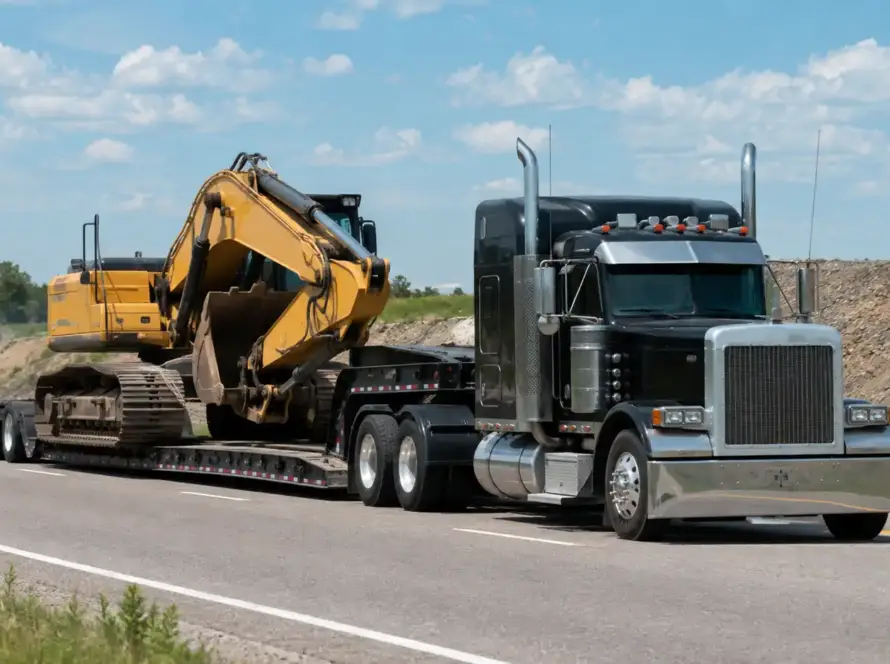
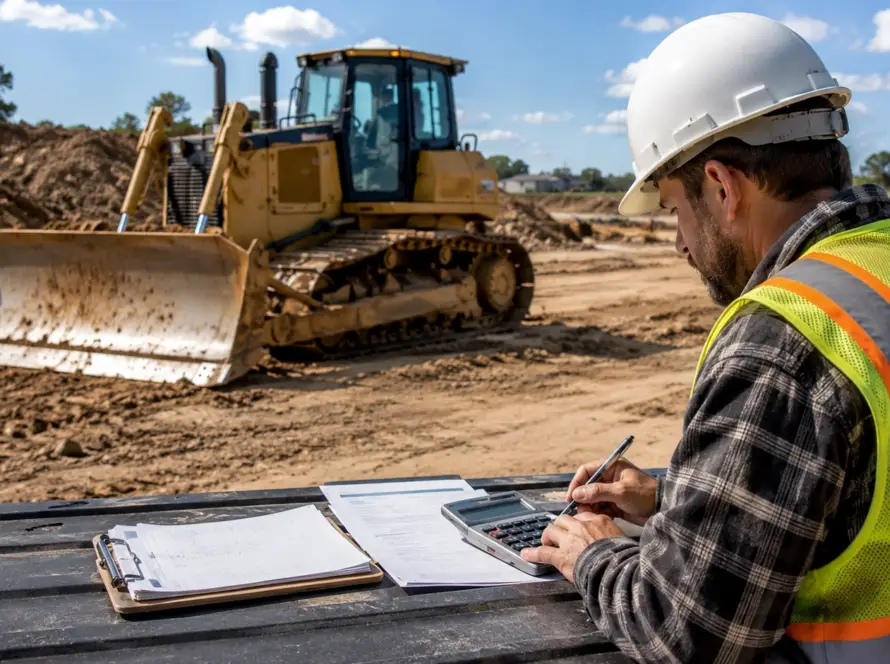
Used excavator financing should read like a forensic report. The buyer needs photographs, service history, electronic data where available, an undercarriage measurement, hydraulic performance, pin and bushing condition, final-drive checks, leak inspection, attachment inventory, and a clear account of prior duty.
The financial model begins after the inspection, not before it. Findings should change the price, repair reserve, term, down payment, or decision to walk away. A low acquisition price is not a bargain when immediate wear items consume project cash or when the machine cannot reliably support the backlog used to justify it.
Table of Contents
- Read the Machine Like an Inspection Report
- Hours Need Context
- Market Context Without Market Chasing
- Translate Wear Into a Repair-Adjusted Price
- Attachments and Hydraulic Compatibility
- Backlog Quality and Billable Hours
- Down Payment Versus Repair Reserve
- The Used-Excavator Evidence File
- Financing Term Versus Remaining Life
- Evidence for the Used-Equipment File
- Written Walk-Away Conditions
- Frequently Asked Questions
- Let Inspection Evidence Set the Price
- Sources
Inspection evidence outranks sales language.
Read the Machine Like an Inspection Report
Finding
Evidence note: Age, hours, and mileage create a starting point, but they do not establish condition. The inspection should address machine hours, idle hours, undercarriage wear, slew bearing, boom and stick pins, cylinders, pumps, final drives, engine, emissions system, electronics, leaks, structural cracks, and service history. Prior duty, storage, overloading, contamination, collision or structural repair, operator practice, and maintenance quality can make two apparently similar units carry very different remaining risk.
The first maintenance cycle should be priced before the financing amount is finalized. Items such as undercarriage, final drives, hydraulic pumps, cylinders, pins and bushings, cooling system, emissions components, bucket wear, and transport downtime may arrive earlier than the scheduled payment model suggests. Keeping a repair reserve is often more financially useful than putting every available dollar into the down payment.
Financial interpretation
Inspection findings should be converted into decisions. A concern involving machine hours may justify a repair before delivery, a price reduction, a larger reserve, a shorter term, a seller warranty, or a decision to stop. The purpose is not to predict every failure. It is to identify material wear and allocate responsibility before closing.
Service records matter when they can be reconciled with the unit. The project team should compare serial numbers, dates, hours or mileage, parts replaced, recurring fault history, and major work. Missing records do not automatically make a purchase impossible, but they increase the value of an independent inspection and reduce the confidence that should be placed in a long remaining-life assumption.
Hours Need Context
Repair exposure: Useful life is an operating estimate, not a number taken automatically from an accounting schedule. Remaining life depends on prior duty, condition, annual use, maintenance support, technology, customer requirements, and the point at which downtime or repair cost makes replacement more sensible.
| Ownership stage | Main question | Evidence |
|---|---|---|
| Entry | What condition and project cost are being accepted? | Inspection of idle hours and complete budget |
| Midpoint | Which major maintenance event is likely? | hydraulic pumps |
| Late term | Will the unit still fit the work and support network? | Utilization, downtime, technology, and customer needs |
| Exit | Sell, trade, keep, or replace? | Balance, condition, market, and replacement plan |
Term, planned replacement, major maintenance, and expected exit should be placed on one timeline. When a large repair and the remaining balance occur at the same point, the structure may be too long or the down payment and reserve may be inadequate. For the used excavator, record this point in the Hours Need Context review before closing.
The ownership plan should mark likely service events involving undercarriage, final drives, hydraulic pumps, cylinders, pins and bushings, cooling system, emissions components, bucket wear, and transport downtime. It should also identify when the used excavator may no longer fit the construction company's work because of capacity, emissions rules, software support, safety expectations, accessibility requirements, or customer specifications. Obsolescence can arrive before physical failure.
Resale or trade value should be treated as uncertain. Configuration, brand support, records, condition, market demand, and timing influence exit value. A projected resale figure can support comparison, but it should not be the only reason a transaction appears affordable or the only source expected to satisfy a final obligation. For the used excavator, record this point in the Hours Need Context review before closing.
Market Context Without Market Chasing
Price adjustment: Construction activity is large but uneven across regions, customers, and project types.
The U.S. Census Bureau estimated May 2026 construction spending at a seasonally adjusted annual rate of about $2.21 trillion, while year-over-year conditions remained softer. That national total does not finance a specific machine; awarded work, bid margins, mobilization timing, and collection terms do.
Translate Wear Into a Repair-Adjusted Price
Inspection finding: Replacement economics should include avoided cost and protected service. Expansion economics require incremental work. The field operation should not count revenue that existing capacity already produces. For assignments such as site preparation, trenching, utilities, drainage, demolition, loading, road work, and material handling, the model needs to show what the proposed unit changes rather than simply adding total company revenue to the worksheet.
| Case | Operating assumption | Decision use |
|---|---|---|
| Conservative | Lower billable machine hours, delayed collections, and one maintenance interruption | Tests survival without consuming protected cash |
| Expected | Documented workload and normal fuel | Primary basis for affordability |
| Strong | Higher utilization or additional work involving utilities | Upside only, not the repayment foundation |
The economic case should use the operating unit that creates revenue, savings, or service capacity. For the used excavator, the model may draw from billable machine hours, operator cost, fuel, mobilization, attachments, maintenance, project margins, retainage, weather delays, and customer payment timing. Gross output is not enough. Labor, fuel or power, materials, consumables, maintenance, insurance, travel, setup, downtime, and collection delay must be deducted before the contribution is compared with the financing obligation.
Use three cases. The conservative case reflects a plausible slow period, delayed deployment, weather interruption, staffing shortage, or weaker customer volume. The expected case uses current records and supportable demand. The strong case shows upside, but it should not be required to make the payment affordable. For the used excavator, record this point in the Translate Wear Into a Repair-Adjusted Price review before closing.
Construction backlog and weather can make utilization and collections uneven. The model should therefore show when work is completed and when cash is likely to arrive. A purchase can create accounting profit while still causing a bank-balance problem if receivables, retainage, crop sales, broker payments, or municipal billing move more slowly than the scheduled payment.
Attachments and Hydraulic Compatibility
Which requirement cannot be compromised?
Evidence note: Choose the specification that controls safety, legality, capacity, or customer acceptance. For this used excavator, dig depth deserves a written threshold.
What must connect to existing operations?
Check interfaces involving hydraulic flow, support equipment, utilities, software, and transport.
Which option needs an economic reason?
Tie coupler to measurable output, labor, quality, or downtime before paying for it.
The specification sheet should begin with the work, not the options list. For the used excavator, relevant variables may include operating weight, dig depth, reach, bucket capacity, hydraulic flow, auxiliary circuits, coupler, undercarriage, boom and stick, counterweight, emissions tier, telematics, and transport requirements. Each item should be tied to access, output, quality, legal configuration, operator use, maintenance, transport, or customer requirements. A feature without a defined operating effect is a preference, not a requirement.
Compatibility can be more expensive than capacity. The used excavator may need to work with existing vehicles, implements, attachments, utilities, software, trailers, buildings, materials, or service procedures. A mismatch can require cash spending on inspection, delay the start date, or prevent the unit from accepting the work used to justify it.
The contractor should separate three categories: nonnegotiable specifications, economically useful options, and features that are attractive but unsupported. This creates a disciplined response when a seller proposes a substitute unit. Availability is valuable only when the substitute still performs the required job and does not transfer hidden work to employees or other equipment.
Before the quote is approved, compare the selected configuration with at least two representative operating situations from site preparation, trenching, utilities, drainage, demolition, loading, road work, and material handling. The comparison should expose what happens at the edge of the requirement, such as the heaviest load, narrowest access, longest route, highest-output shift, or most demanding season.
Backlog Quality and Billable Hours
Repair exposure: A backlog total is not enough to support an equipment purchase. The project team should separate signed contracts, recurring customers, purchase orders, historical repeat work, bids awaiting award, and general sales opportunities. Each category has a different probability, start date, margin, equipment requirement, and collection pattern.
| Demand category | Evidence | How to use it |
|---|---|---|
| Signed or awarded work | Contract, purchase order, route assignment, or schedule | Primary support when margin and timing are verified |
| Recurring historical work | Invoices and deposits | Use with retention and collection history |
| Pending bid or opportunity | Bid documents and probability | Upside case, not the sole repayment basis |
| Replacement need | Downtime, rentals, or missed service records | Supports capacity protection rather than new revenue |
Project and customer timing need to match delivery. A unit arriving after the job starts may require rental or subcontracting in addition to the financed asset. A unit arriving early may sit while insurance and payment obligations continue. The purchase case should show both possibilities. For the used excavator, record this point in the Backlog Quality and Billable Hours review before closing.
The proposed used excavator should be tied to work it can actually perform. For assignments such as site preparation, trenching, utilities, drainage, demolition, loading, road work, and material handling, confirm location, schedule, specification, service level, cancellation rights, customer concentration, and whether the price covers operating cost. A contract can add volume without adding cash contribution.
The cash forecast should use contract payment terms and actual collection history. Retainage, broker deductions, payer review, municipal approval, crop-sale timing, or customer disputes can delay the conversion of billable machine hours, operator cost, fuel, mobilization, attachments, maintenance, project margins, retainage, weather delays, and customer payment timing into available cash.
Down Payment Versus Repair Reserve
Price adjustment: A payment test should be built from bank timing, not annual averages. Map the months or weeks when the contractor pays labor, fuel or power, materials, insurance, taxes, repairs, and other obligations. Then place customer collections, crop sales, reimbursements, retainage releases, or contract payments on the same calendar.
| Period | Likely cash pressure | Control |
|---|---|---|
| Before delivery | Deposit, insurance, and operator cost | Confirm remaining liquidity |
| First operating cycle | Labor, fuel or power, and mobilization before collection | Maintain working-capital reserve |
| Slow period | construction backlog and weather can make utilization and collections uneven | Use conservative workload and payment timing |
| Repair period | hydraulic pumps plus lost capacity | Reserve, warranty, rental, or backup plan |
Create a separate repair-and-downtime case. Assume a plausible issue involving bushings, then add the cost of replacement capacity, lost work, rescheduling, or overtime where relevant. This is not a prediction of failure. It tests whether one ordinary equipment problem would destabilize the payment plan.
The low point on that calendar matters more than the best month. Construction backlog and weather can make utilization and collections uneven. The proposed used excavator should not force the company to borrow for payroll, delay taxes, postpone maintenance, or use emergency reserves during a normal seasonal or receivable gap.
Down payment decisions belong inside this test. More cash down may reduce the scheduled obligation, but less liquidity can increase operating risk. The right contribution leaves enough working capital to place the unit into service, run through the first collection cycle, and respond to a realistic maintenance event. For the used excavator, record this point in the Down Payment Versus Repair Reserve review before closing.
The Used-Excavator Evidence File
Inspection finding: Organize the purchase around findings, not seller descriptions. The file contains hours, duty history, diagnostic data, undercarriage measurements, hydraulic performance, structural review, attachments, maintenance records, repair estimates, and a price response to each material issue. Financing terms should reflect the remaining useful life supported by that evidence.
The contractor can build this working model with operating records rather than broad market assumptions. Use recent invoices, dispatch or production data, service history, employee schedules, vendor documents, and bank activity where relevant. Separate confirmed work from probable work and probable work from a general sales opportunity. The used excavator should not receive full utilization on day one unless the records support that assumption.
| Evidence layer | Article-specific example | Management use |
|---|---|---|
| Operating evidence | material handling | Confirm volume, timing, and margin |
| Configuration evidence | reach | Match the real assignment |
| Condition or readiness | undercarriage wear | Price repair or deployment delay |
| Cash evidence | weather delays | Use conservative timing |
| Control evidence | intended jobs | Keep written support in the file |
Run the model in at least three versions. The conservative version includes a slower start, one meaningful interruption, and delayed cash receipts. The expected version uses current records without assuming perfect execution. The strong version can show upside, but it should not be the only version that supports the obligation. For this purchase, a stress event involving bushings should be visible rather than buried in a general contingency percentage.
Finish with written decision gates. Confirm the seller, configuration, placed-in-service date, total project cost, inspection or acceptance evidence, insurance, cash due at closing, and the reserve remaining afterward. If a gate fails, the response may be a price adjustment, repair, different unit, revised financing structure, delayed purchase, rental, or no transaction. That discipline is more useful than forcing the used excavator into a payment target.
- State the operating result expected from trenching.
- Verify the requirement involving hydraulic flow.
- Document the condition or readiness issue involving boom.
- Keep liquidity for billable machine hours.
- Assign a named owner and due date to every unresolved gate.
Financing Term Versus Remaining Life
Evidence note: Financing proposals should be normalized before they are compared. Use the same purchase price, down payment, amount financed, term, payment frequency, fees, included project costs, end-of-term obligation, and assumed delivery date. A lower payment created by a longer term or a large final obligation is not automatically a lower-cost or lower-risk choice.
- Use the same transaction assumptions for every proposal.
- Confirm whether tax is included or paid separately.
- Match term to useful life and planned ownership.
- Ask for early payoff and end-of-term terms in writing.
- Do not rely on unverified tax outcomes or promised approval.
Request written answers on cash due at closing, number and timing of payments, fees, security interests, insurance requirements, vendor payment conditions, early payoff method, and end-of-term responsibilities. Tax or accounting benefits should be reviewed with qualified professionals and should not be treated as guaranteed savings. For the used excavator, record this point in the Financing Term Versus Remaining Life review before closing.
Term length should reflect expected useful life and the planned ownership horizon for the used excavator. A schedule that extends beyond the period of productive use can leave the project team paying after the unit requires replacement or major work. A term that is too short may create unnecessary cash pressure even when the asset will remain useful for years.
Loan and lease structures are not interchangeable. Ownership, purchase options, residual obligations, early termination, accounting treatment, tax treatment, and flexibility can differ. No structure is universally best. The appropriate choice depends on cash flow, expected use, ownership goals, asset type, and the programs available to the applicant. For the used excavator, record this point in the Financing Term Versus Remaining Life review before closing.
Evidence for the Used-Equipment File
Repair exposure: An underwriting file should tell one consistent story. The legal business name, ownership, seller, price, serial or VIN information, cash contribution, equipment description, intended use, and requested structure need to agree across the application, quote, insurance, and supporting documents. Inconsistency creates questions even when each document looks complete by itself.
- Collect purchase order, serial number, hours, inspection report, telematics or service history, attachment list, seller information, lien status, insurance, and intended jobs.
- Reconcile legal names, prices, identifiers, and seller details.
- Explain the operating need using operator cost.
- Resolve inspection, lien, title, and insurance items early.
- Keep approval, documentation, closing, and funding as separate milestones.
The business explanation should connect the equipment to repayment capacity without exaggeration. Use current workload, replacement history, contracts, route data, production records, or a conservative forecast based on billable machine hours, operator cost, fuel, mobilization, attachments, maintenance, project margins, retainage, weather delays, and customer payment timing. Approval and funding remain separate stages; a credit decision does not mean every closing condition has been satisfied.
The review may consider business and personal credit, time in business, revenue, bank activity, existing obligations, cash flow, industry conditions, owner experience, equipment value, seller information, and the proposed transaction. No single factor controls every decision, and requirements vary by applicant, asset, program, and funding source. For the used excavator, record this point in the Evidence for the Used-Equipment File review before closing.
For the used excavator, useful supporting records may include purchase order, serial number, hours, inspection report, telematics or service history, attachment list, seller information, lien status, insurance, and intended jobs. Used or specialized units may require more evidence involving machine hours. The construction company should request a document list early, assign an owner to each item, and resolve title, lien, inspection, insurance, or seller issues before building operations around an assumed funding date.
Written Walk-Away Conditions
Price adjustment: A final decision should make the tradeoffs visible. For used excavator financing, the contractor is not choosing between an expensive unit and a cheap unit. It is choosing among different combinations of readiness, condition risk, operating fit, cash use, payment structure, and exit flexibility.
- State the nonnegotiable job for the used excavator.
- Set a maximum total project cost, not only a payment target.
- Define the minimum cash reserve after closing.
- Require written resolution of inspection and documentation issues.
- Re-run the decision if price, configuration, delivery date, or financing changes.
The base case should stand without optimistic assumptions about billable machine hours, operator cost, fuel, mobilization, attachments, maintenance, project margins, retainage, weather delays, and customer payment timing. Then test a slower start, one major repair or implementation delay, and weaker collections. A proposal that works only in the strongest case is not necessarily affordable; it may simply postpone the pressure.
Write the decision criteria before the last proposal arrives. The criteria should reflect lower purchase price versus remaining useful life, the work the used excavator must perform, the latest acceptable start date, the amount of liquidity that must remain available, and the failures the business cannot tolerate. Weight the few factors that could actually change the outcome.
Record why the selected option won and which conditions still need to be satisfied. That note becomes useful during closing, deployment, and the next equipment review. It also prevents a late discount, trade allowance, or monthly-payment change from replacing the operating logic that started the purchase. For the used excavator, record this point in the Written Walk-Away Conditions review before closing.
Frequently Asked Questions
Can a startup obtain used excavator financing?
Inspection finding: Programs may be available to some newer businesses, but startup requests can receive closer review of owner experience, credit, equity contribution, contracts, cash reserves, seller, and the business plan. A startup should not forecast full utilization immediately. It should show a staged ramp and enough liquidity to absorb slower sales or collections.
What documents should be ready before applying?
A useful file normally includes business and owner information, recent financial or bank records as requested, a detailed invoice or purchase order, seller information, equipment identifiers, and supporting records such as insurance. The exact list varies by transaction. Clean, consistent documents can reduce avoidable questions, but they do not guarantee approval or funding. For the used excavator, record this point in the Frequently Asked Questions review before closing.
How does equipment condition affect the request?
Condition affects reliability, value, remaining life, maintenance reserve, and sometimes program eligibility. For this used excavator, review evidence related to machine hours. A low price does not offset a short remaining life when repairs and downtime occur during the busiest operating period.
Can a used used excavator qualify for financing?
It may. Availability and terms depend on the applicant, transaction, seller, equipment age, condition, value, remaining useful life, documentation, and the financing program. A buyer should support the request with a credible inspection, ownership records, and specific findings on machine hours rather than relying on age or hours alone.
How fast can a used excavator financing transaction close?
Timing depends on the applicant, equipment, seller, amount, documentation, credit review, inspection, insurance, title or lien work, and closing conditions. A credit decision is not the same as funding. Build the operating schedule around a realistic path from application to delivery and acceptance instead of assuming an immediate close. For the used excavator, record this point in the Frequently Asked Questions review before closing.
Should the business pay cash instead of financing?
That depends on the value of liquidity. Paying cash can avoid financing cost, while financing may preserve funds for payroll, materials, repairs, seasonal needs, or other investments. Compare the total cost and risk of both choices, including what happens if the business uses most of its cash just before a slow month or major repair. For the used excavator, record this point in the Frequently Asked Questions review before closing.
Let Inspection Evidence Set the Price
Evidence note: Capital equipment should remove a defined problem or protect a defined service. When the purpose is vague, a long term can make uncertainty look affordable without making it safer.
For used excavator financing, the project team should select the used excavator only after the work, timing, condition, support, financing structure, and remaining liquidity have been tested together. Approval and funding depend on the applicant and transaction, and no forecast eliminates operating risk.
Business owners who want help organizing the equipment request and comparing available structures can contact Vitality Finance or start an application. The conversation should begin with the asset, the operating need, and the financial evidence behind the purchase, not with a promised approval or a payment taken out of context. For the used excavator, record this point in the Let Inspection Evidence Set the Price review before closing.
